Exam Topics
- F5CAB2
- F5CAB2.05
- Explain methods of providing HA integrity
- Explain advantages of HA
- F5CAB2.05
Introduction
In the previous HA Architecture course, we explored the different High Availability models available on F5 BIG-IP and the key components used to build a cluster, such as Device Trust and Device Groups.
In this course, we will dive deeper into the Config-Sync mechanism. We will see how it is used to maintain configuration consistency and integrity across multiple BIG-IP devices inside the same cluster.
What is Config-Sync ?
When creating a Device Group in a High Availability environment, you can choose between two types:
- Sync-Only Device Group
- Sync-Failover Device Group
Both rely on the Config-Sync mechanism to synchronize configuration data between devices. (The Sync-Failover group additionally provides traffic failover capabilities.)
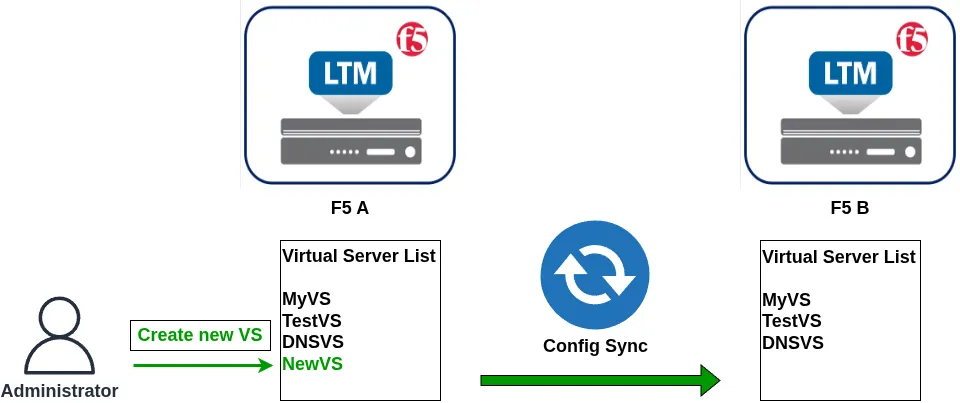
Keeping configurations synchronized across all units is critical in a clustered environment. For example, if you create a Virtual Server on Unit A, you want that configuration change to propagate to Unit B.
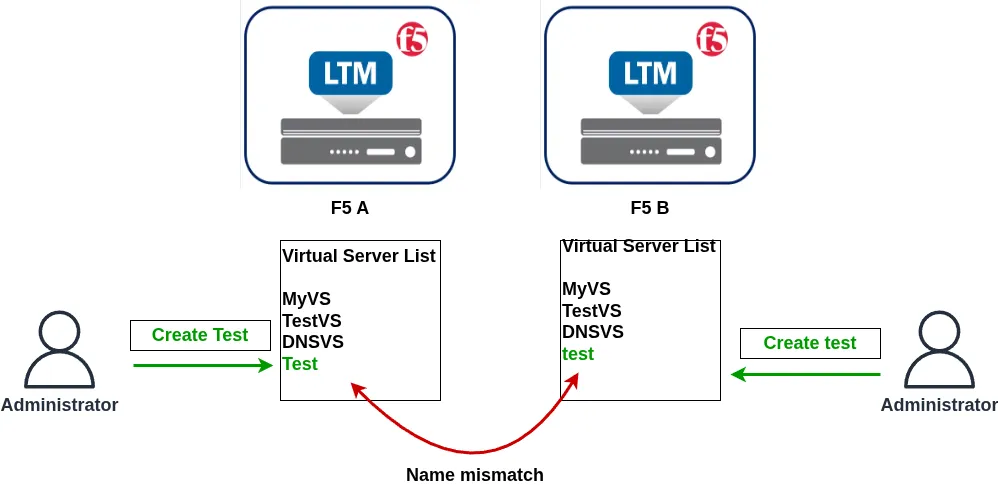
Without synchronization, administrators would need to manually recreate the same configuration on each device, which could easily introduce inconsistencies or human errors, such as:
- Different object names (
testvsTest) - Incorrect IP addresses
- Missing profiles or monitors
- Outdated configurations on standby devices
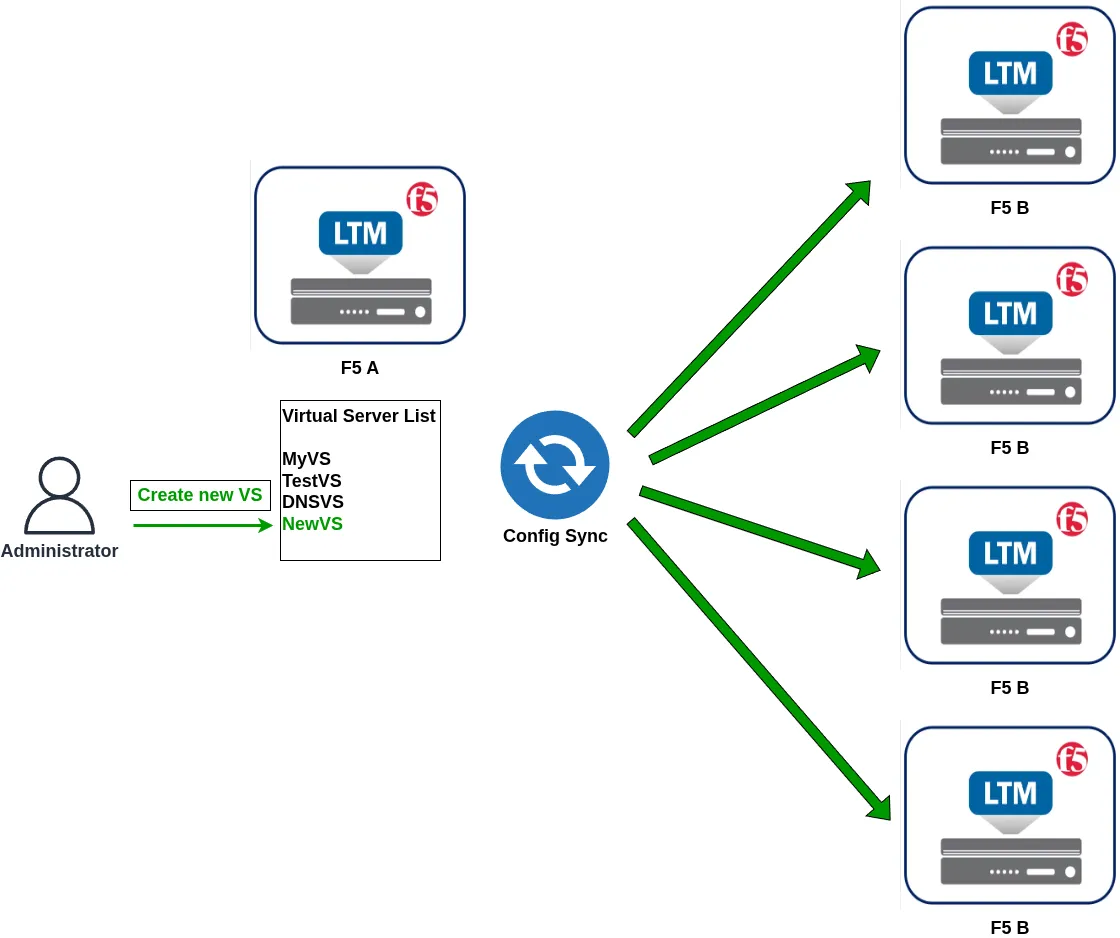
This becomes even more important considering that a Sync-Only Device Group can contain up to 32 devices. Manually maintaining identical configurations across dozens of BIG-IP systems would quickly become unmanageable.
When BIG-IP devices belong to the same Device Group, the Config-Sync utility ensures that configuration changes are propagated and kept up to date across all members.
Config-Sync channel
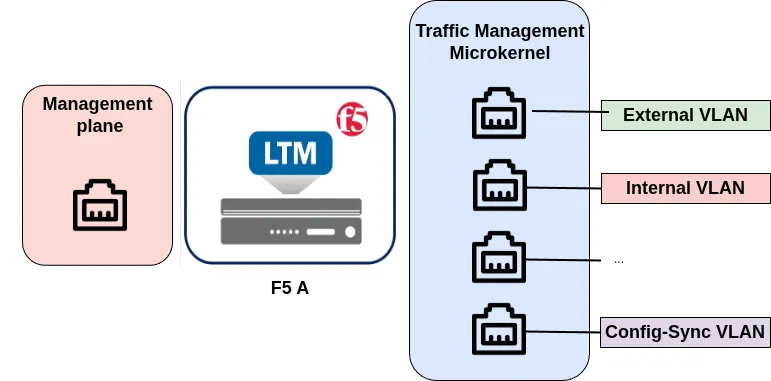
To exchange and synchronize configuration data, BIG-IP devices use the ConfigSync address configured during Device Trust setup.
This address uses the TMM (Traffic Management Microkernel) network plane rather than the management interface, meaning it behaves like a production traffic interface.
...