Exam Topics
- F5CAB2
- F5CAB2.05
- Explain methods of providing HA
- Explain advantages of HA
- F5CAB2.05
Introduction
Deploying an application is essential, but relying on a single device or component creates a single point of failure, which can quickly become a serious risk for your business. If your application becomes unavailable, it can result in lost revenue, disrupted services, and damage to your reputation due to poor user experience.
To mitigate these risks, it is important to design your infrastructure with redundancy and high availability in mind.
This is where the F5 BIG-IP High Availability (HA) model comes into play. HA allows you to deploy multiple BIG-IP devices working together to provide service continuity. If one device fails, another can automatically take over traffic processing, ensuring that applications remain available to users.
In this article, we will explore how the F5 HA model works and how it helps you build a resilient and highly available application delivery environment.
Comparing Active/Standby and Active/Active Architectures
There are two main ways to design High Availability on F5 BIG-IP: Active/Standby and Active/Active architectures.
Active/Standby
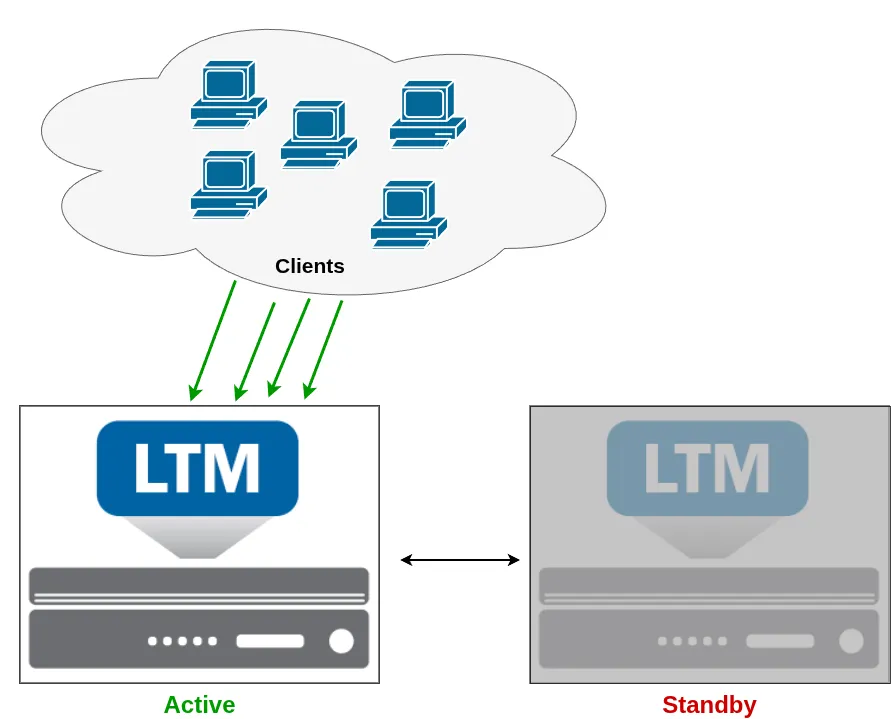
This is the most common design and is well suited for many environments. One device operates as the active unit and processes all production traffic, while the second device remains in standby mode.
The standby unit continuously monitors the active device and is ready to take over if a failure occurs. This provides service continuity with a simple and predictable design.
Active/Active
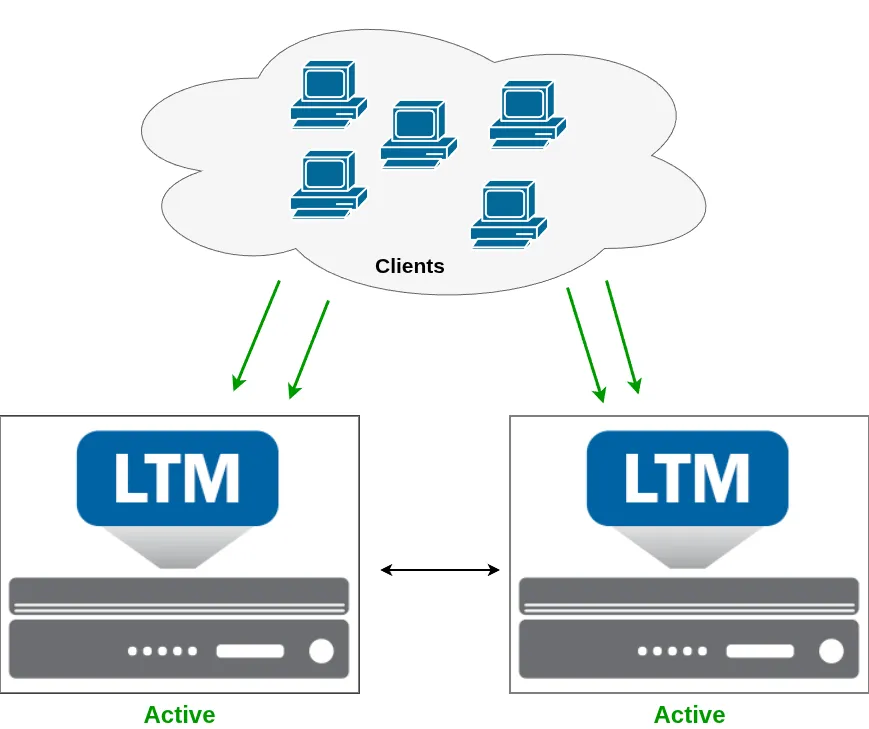
While Active/Standby offers simplicity, one device remains mostly idle during normal operations. In an Active/Active architecture, both devices actively process traffic at the same time.
Traffic is usually distributed through different traffic groups (sets of floating objects such as Virtual Servers, SNATs, and floating IPs). This allows each device to handle a portion of production traffic.
Benefits of Active/Active include:
- Better hardware utilization
- Improved return on investment
- Ability to split workloads by application, business unit, or capacity needs
However, Active/Active designs are generally more complex. Traffic flows can be harder to understand, resource usage may become unbalanced, and if one unit fails, the surviving device must be sized to absorb the additional load.
More Than Two Devices with DSC
Although two-device deployments are the most common, F5 BIG-IP supports larger clusters through Device Service Clustering (DSC). A DSC deployment can support up to 32 devices in a Sync-Only configuration (configuration synchronization only), or up to 8 devices in a Sync-Failover configuration, where both configuration synchronization and traffic failover are enabled.
DSC enables both configuration synchronization and traffic failover, and can be used in Active/Standby or Active/Active topologies depending on design requirements.
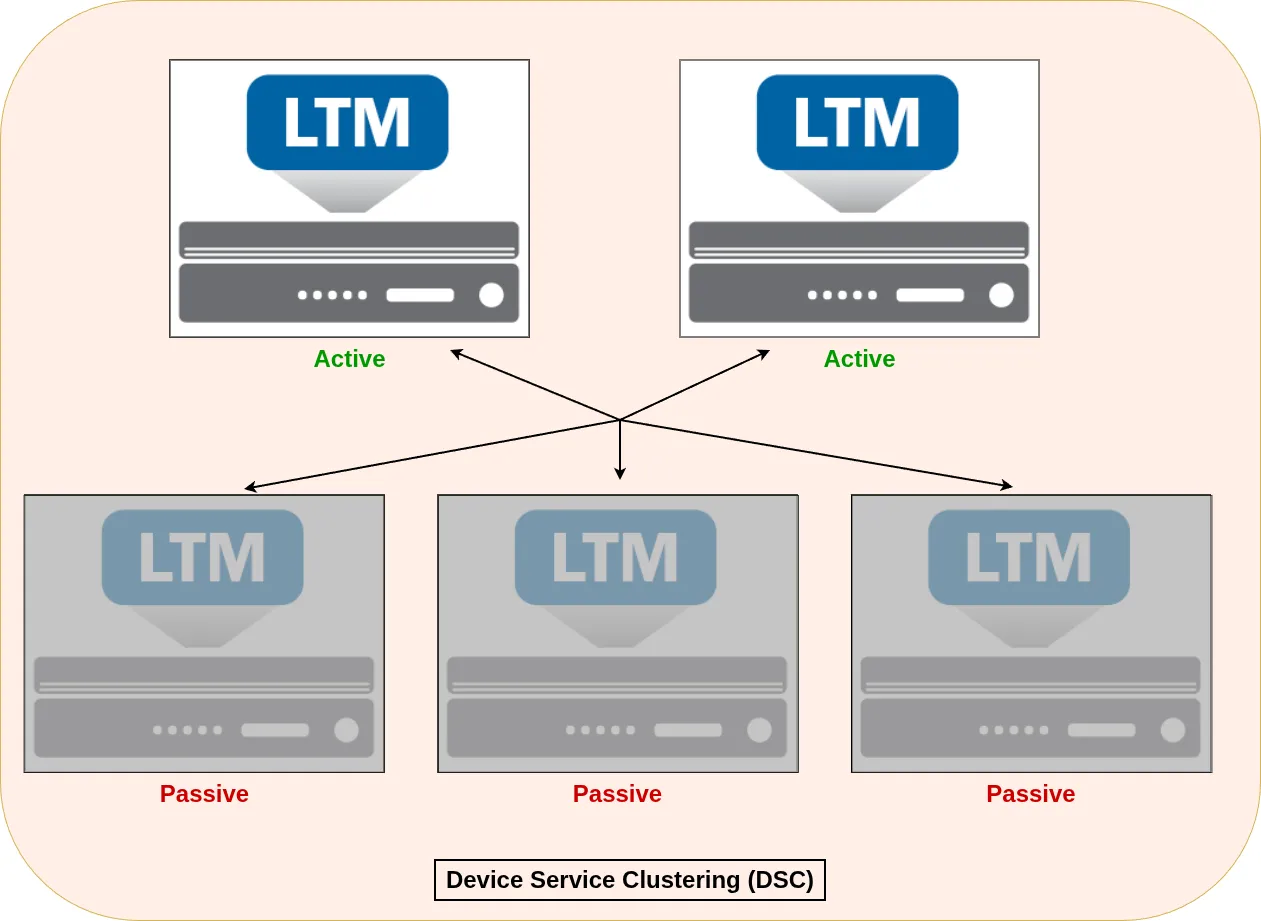
Establishing Device Trust
Before BIG-IP devices can synchronize configuration or participate in failover, they must first establish a Device Trust relationship.
Without trust, unauthorized devices could attempt to join the cluster. Device Trust ensures that only approved systems become members of the environment.
Trust Domain Concept
Each BIG-IP initially starts with its own local trust domain. To build a trust domain, one device is used as the initial trusted member, and additional devices are added into that trust domain.
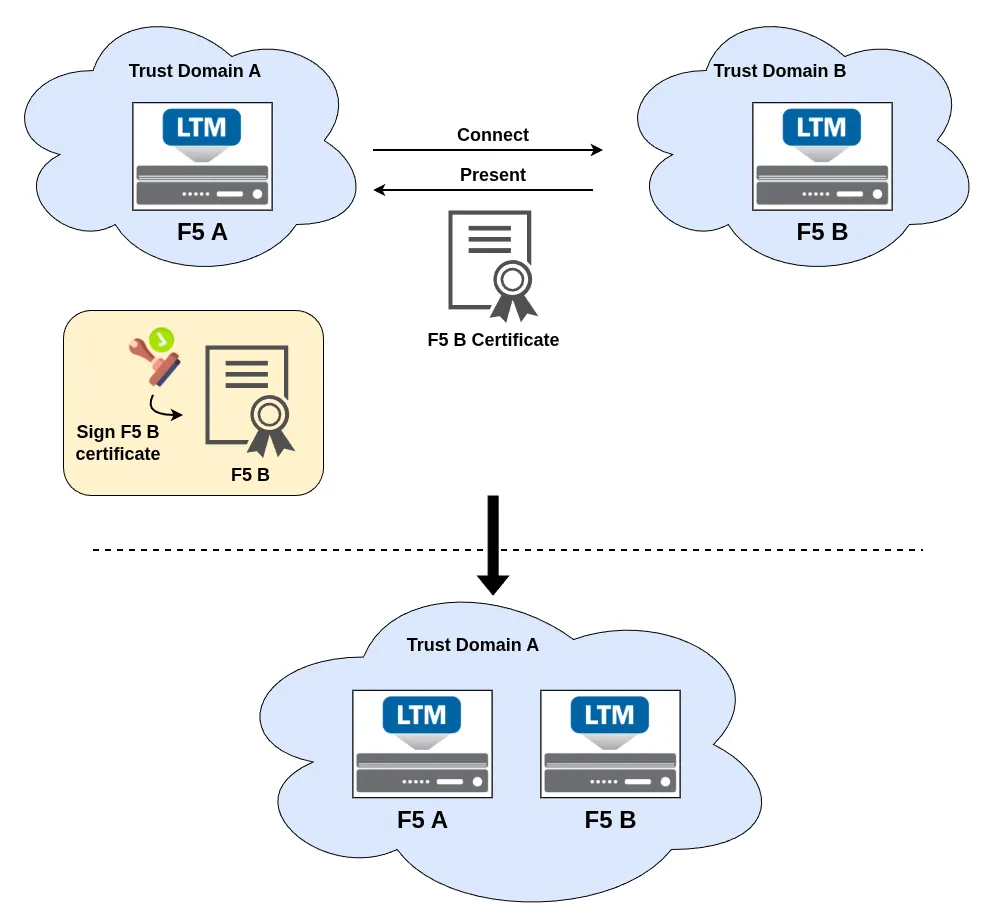
...